
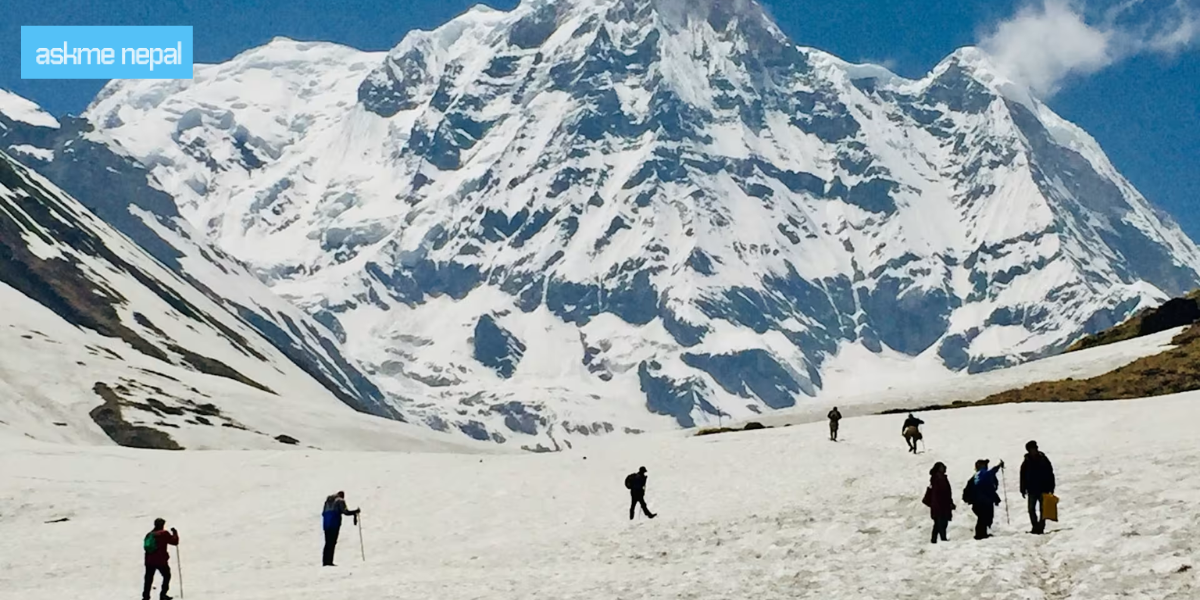

Picture this: a 55-kilometre wall of ice and rock rising above north-central Nepal, where thirty peaks pierce the sky above 6,000 metres. The Annapurna massif isn't just another mountain range; it's a natural amphitheatre where earth touches heaven, where ancient cultures thrive in mountain villages, and where over 246,000 trekkers discovered their calling in 2025 alone.
This comprehensive guide takes you deep into the heart of the Annapurna Himalayas, revealing everything from its deadly climbing routes to family-friendly teahouse treks, from the sacred peaks that locals revere to the rhododendron forests that carpet its lower slopes.
Quick Overview of Annapurna Himalayas:
- Highest Peak: Annapurna I (8,091 metres) - 10th highest mountain globally
- Massif Length: 55 kilometres of continuous mountain wall
- Protected Area: 7,629 square kilometres of conservation land
- Best Trekking Seasons: October-November (autumn) and March-May (spring)
- Annual Visitors: 246,575 trekkers in the first 10 months of 2025
What Makes the Annapurna Massif Unique?
The Annapurna massif stands as one of nature's most dramatic creations in the Annapurna Himalaya, Nepal region. Bounded by the world's deepest gorge (Kali Gandaki) to the west, the Marshyangdi River to the north and east, and Pokhara Valley to the south, this compact mountain range packs extraordinary diversity into a relatively small geographical area.
Unlike the sprawling Everest region, the Annapurna range compresses one peak over 8,000 metres, thirteen peaks over 7,000 metres, and sixteen more above 6,000 metres into just 55 kilometres. This concentration creates a visual spectacle unmatched anywhere on earth—you can stand in Pokhara at 827 metres elevation and gaze up at peaks towering more than 7,000 metres above you.
The name "Annapurna" derives from Sanskrit, meaning "goddess of food and nourishment." Local communities have revered these mountains for centuries, believing they provide the life-giving waters that flow down to irrigate Nepal's agricultural heartland. The massif's summit rocks are limestone, remnants of an ancient ocean floor thrust skyward by the collision of tectonic plates millions of years ago.
What truly sets this massif apart is its accessibility combined with its grandeur. While climbing Annapurna I demands world-class mountaineering skills, the surrounding region offers trekking routes suitable for everyone from families to adventure seekers. You'll walk through subtropical forests, alpine meadows, high-altitude deserts, and traditional mountain villages—all within the same journey.
The Annapurna massif info reveals fascinating geological diversity, too. The region encompasses multiple climatic zones within a 120-kilometre span, creating habitats for snow leopards, Himalayan tahrs, over 500 bird species, and some of the world's rarest wildlife. The southern slopes receive heavy monsoon rainfall (up to 5,032 millimetres annually at certain elevations), while the northern rain-shadow areas like Mustang remain desert-dry.
The Peaks of the Annapurna Massif
Annapurna I (8,091 metres)
The crown jewel of the Annapurna massif, Annapurna I, holds the distinction of being the first 8,000-metre peak ever successfully climbed. On 3 June 1950, French climbers Maurice Herzog and Louis Lachenal reached the summit without supplementary oxygen—a feat considered miraculous even by today's standards. Their triumph came at a tremendous cost: severe frostbite resulted in the amputation of all of Herzog's fingers and both climbers' toes.
Annapurna I earned the Guinness World Records designation as the "Deadliest Mountain to Climb." By January 2022, only 365 people had summited Annapurna I, with 72 climbing fatalities—a death rate approaching 20 per cent. The mountain's notorious south face rises 3,000 metres of sheer rock and ice, creating one of mountaineering's most formidable challenges.
The peak's extreme danger stems from unpredictable weather patterns, avalanche-prone slopes, and the mountain's technical difficulty. Unlike Everest's commercial routes with fixed ropes and established camps, Annapurna offers few such luxuries. Most climbers tackle it without bottled oxygen, adding altitude's cruel effects to already overwhelming challenges.
Annapurna II (7,937 metres)
Standing at the eastern anchor of the Annapurna Himalayas, Annapurna II presents a distinctive pyramidal shape that has captivated mountaineers since its first ascent in 1960. This independent peak serves as the 16th-highest mountain globally and connects to Annapurna IV through a hanging glacier. The northeastern wall displays a remarkable formation that resembles a human skull, created by cornices and rock bands sculpted by wind and weather.
Annapurna III (7,555 metres)
Notorious among experienced climbers for its technically challenging slopes, Annapurna III attracts those seeking adrenaline-filled alpine adventures. The peak's steep faces and complex route-finding demands advanced mountaineering skills and intimate knowledge of high-altitude climbing techniques.
Annapurna IV (7,525 metres)
Characterized by sharp ridges and jagged rock faces, Annapurna IV presents primarily rock-climbing challenges rather than ice and snow routes. This peak tests climbers' technical rock skills at extreme altitudes where oxygen is scarce, and weather can turn deadly within minutes.
Gangapurna (7,455 metres)
First climbed on 6 May 1965 by a German expedition via the East Ridge, Gangapurna's glaciers feed some of the region's most spectacular waterfalls and lakes. The peak's western face presents a formidable ice wall visible from many points along the Annapurna Circuit.
Annapurna South (7,219 metres)
Also known as Annapurna Dakshin or Moditse, this peak was conquered in 1964 by a Japanese team climbing the North Ridge. Annapurna South forms one side of the gateway to Annapurna Sanctuary, creating the dramatic entrance that trekkers pass through on their way to Base Camp.

Machapuchare (6,993 metres)
Though just missing the 7,000-metre mark, Machapuchare (or Machhapuchchhre) deserves special mention. Named "Fishtail Mountain" for its distinctive double summit resembling a fish's tail, this sacred peak remains unclimbed by decree. In 1957, Wilfrid Noyce and A.D.M. Cox climbed to within 50 metres of the summit before turning back out of respect for local religious beliefs. Since then, Nepal has banned all climbing attempts on Machapuchare, preserving its virgin summit as a sacred space.
From Pokhara's lakeside, Machapuchare dominates the skyline, its sharp spire standing sentinel over the valley. Local legend holds that the god Shiva resides on its summit, making it one of the most spiritually significant mountains in the entire Annapurna Himalaya Nepal region.
Why the Annapurna Massif Is So Dangerous
The Annapurna range has earned its deadly reputation through decades of tragedy. What makes this massif particularly treacherous compared to other 8,000-metre peaks?
Unpredictable Weather Systems: The massif's position between the humid southern plains and the dry Tibetan plateau creates volatile weather patterns. Storms materialize with terrifying speed, trapping climbers in blizzard conditions at altitudes where survival margins are measured in hours, not days.
Avalanche Danger: The steep faces and heavy snowfall create perfect avalanche conditions. The south face of Annapurna I is especially notorious—a 3,000-metre wall where snow and ice regularly thunder down with devastating force. Even well-prepared expeditions have been wiped out by unexpected avalanches.
Technical Climbing Difficulty: Unlike Everest's more straightforward routes (though certainly not easy), Annapurna demands expert technical climbing skills across mixed terrain—ice, rock, and snow. The mountain offers few rest points, and climbers must navigate objective hazards throughout the ascent and descent.
Lack of Fixed Infrastructure: Everest's commercial routes feature fixed ropes, established camps, and well-trodden paths cleared by hundreds of climbers each season. Annapurna sees far fewer expeditions, meaning each team must largely establish its own route and safety systems.
Limited Oxygen Use: Most Annapurna climbers attempt the peak without supplementary oxygen, adding the full effects of extreme altitude to already overwhelming technical challenges. At 8,000 metres, the air contains only one-third the oxygen available at sea level.
The 2014 snowstorm near Thorong La Pass on the Annapurna Circuit provided a sobering reminder that danger extends beyond climbing. That tragedy claimed 43 lives, including trekkers and their guides, demonstrating that even well-traveled routes deserve serious respect.
However, statistics show improvement. From a fatality rate exceeding 32 per cent historically, recent safety measures and better weather forecasting have reduced the death rate to under 20 per cent. While this remains extraordinarily high compared to Everest's 4.4 per cent fatality rate, it represents significant progress.
Trekking in the Annapurna Massif Region
While climbing the massif's peaks requires world-class mountaineering skills, the surrounding Annapurna massif region offers trekking experiences for all fitness levels and experience. The Annapurna Conservation Area—established in 1985 and covering 7,629 square kilometres—protects these routes while supporting local communities.
Annapurna Base Camp Trek (ABC)
The ABC trek takes you into the heart of the massif, reaching 4,130 metres at base camp. You'll stand in a natural amphitheatre surrounded by a 360-degree panorama of giants: Annapurna I, Annapurna South, Hiunchuli, Gangapurna, and Machapuchare.
Duration: 7-12 days, depending on pace and acclimatization.
Difficulty: Moderate with some challenging ascents.
Highest Point: 4,130 metres (Annapurna Base Camp)
Best Seasons: March-May and October-November
The trail begins in the subtropical lowlands near Pokhara, climbing through terraced rice paddies and traditional Gurung villages like Ghandruk. As you ascend, the landscape transforms from lush rhododendron forests to alpine bamboo groves, finally emerging into the stark beauty of the high Himalaya.
Teahouses dot the entire route, providing warm meals, basic accommodation, and welcome rest after long trekking days. You'll sleep in simple but comfortable rooms, share stories with fellow trekkers around communal fireplaces, and wake to mountain views that seem almost unreal in their grandeur.
The final push to ABC begins at Machapuchare Base Camp (3,700 metres). From there, you'll climb through moraine and glacial terrain to reach the base camp itself. Standing at ABC as dawn illuminates the surrounding peaks remains one of trekking's most powerful experiences—you're literally surrounded by mountains on all sides, in a sanctuary that feels separate from the ordinary world below.
Annapurna Circuit Trek
Circling the entire Annapurna massif, this classic trek covers 160-230 kilometres depending on starting points and side trips. Once requiring three weeks to complete, road construction has shortened some sections, though purists still prefer walking the full traditional route.
Duration: 14-21 days
Difficulty: Challenging due to length and altitude
Highest Point: Thorong La Pass (5,416 metres)
Best Seasons: March-May and October-November
The Circuit showcases incredible diversity. You'll begin in subtropical valleys, pass through the world's deepest gorge (Kali Gandaki), traverse high-altitude desert landscapes that resemble Tibet, cross a 5,416-metre pass, and descend through alpine forests.
Cultural diversity matches the geographical variety. You'll encounter Hindu villages in the lowlands, Tibetan Buddhist communities in the north, and everything in between. Monasteries perch on impossible cliffs, prayer flags flutter in mountain winds, and ancient trade routes tell stories of centuries-old commerce between Nepal and Tibet.

Thorong La Pass represents the trek's climax and greatest challenge. Most trekkers wake at 3-4 AM to cross before afternoon winds make conditions dangerous. The seven-to eight-hour push to the pass and descent to Muktinath on the far side tests everyone, but the sense of accomplishment at the prayer-flag-draped summit makes every difficult step worthwhile.
Poon Hill Trek
Perfect for families and those with limited time, the Poon Hill trek offers spectacular mountain views with minimal altitude challenges and shorter daily walking distances.
Duration: 4-5 days Difficulty: Easy to moderate Highest Point: Poon Hill (3,210 metres) Best Seasons: October-November and March-April
The pre-dawn climb to Poon Hill summit rewards early risers with one of the world's greatest panoramic views. As the sun rises, its light paints Annapurna I and Dhaulagiri (both over 8,000 metres) in shades of pink, orange, and gold. Dozens of other peaks fill the horizon in every direction.
The trek passes through Ghorepani, a traditional Magar village where the hospitality is as warm as the lodge fires. Rhododendron forests burst into spectacular bloom during spring, carpeting entire hillsides in red, pink, and white flowers.
Mardi Himal Trek
A relatively new and less crowded alternative, the Mardi Himal trek offers close-up views of the Annapurna Himalayas without the crowds found on more established routes.
Duration: 5-7 days Difficulty: Moderate Highest Point: Mardi Himal Base Camp (4,500 metres) Best Seasons: March-May and October-November
This trek follows a ridge with spectacular views throughout, climbing through pristine forests to high camps with intimate proximity to major peaks. The relative solitude and unspoiled nature attract those seeking quieter mountain experiences.
When to Visit the Annapurna Massif
Timing your visit correctly makes an enormous difference in your Annapurna Massif experience. Two distinct seasons offer optimal conditions.
Spring Season (March-May)
Spring brings warming temperatures, blooming rhododendrons, and excellent visibility. March through May sees moderate temperatures, comfortable for trekking without extreme cold. Daytime temperatures in lower elevations reach 12-19°C, though nights at higher camps can drop to -8°C or colder.
The famous rhododendron blooms peak in April, transforming entire hillsides into gardens of red, pink, white, and purple flowers. Nepal's national flower creates a spectacular backdrop for your trek photographs.
However, spring's growing popularity means busier trails. April 2025 saw 44,763 trekkers visiting the Annapurna Conservation Area, the highest monthly total of the year. Pre-booking teahouse accommodation becomes essential during peak weeks.
Autumn Season (October-November)
Autumn rivals spring as the most popular trekking season. The monsoon has just ended, washing the air clean and leaving hillsides lush and green. Clear skies provide unobstructed mountain views, and temperatures remain comfortable for walking.
October and November offer Nepal's famous festival season. Dashain and Tihar celebrations fill villages with colour, music, and cultural experiences. You might witness traditional dances, participate in religious ceremonies, and share festival meals with local families.
Statistics show autumn's popularity: October 2025 brought 30,732 international visitors to the region, with November seeing 35,952 trekkers—representing an eight per cent increase over the previous year.
Winter Season (December-February)
Winter trekking presents challenges but rewards hardy adventurers with crystal-clear views and empty trails. High passes like Thorong La may close due to heavy snowfall, and temperatures at altitude plummet to dangerous levels.
January 2025 recorded the lowest monthly visitor count with just 9,359 trekkers. Those who venture into the mountains during winter face extreme cold but encounter few other trekkers. Lower-elevation routes like Poon Hill remain accessible, while higher routes become serious winter mountaineering undertakings.
Monsoon Season (June-September)
The monsoon brings heavy rainfall, leeches, obscured views, and trail closures from mudslides. Most trekking agencies advise against monsoon treks in the Annapurna Himalaya, Nepal region.
However, the northern rain-shadow areas like Upper Mustang remain relatively dry even during the monsoon. This high-altitude desert receives minimal rainfall year-round, making it a viable summer destination when other areas are waterlogged.

Record-Breaking Tourism Numbers
The Annapurna Massif has experienced extraordinary tourism growth. In the first ten months of 2025, the region welcomed 246,575 foreign trekkers, already exceeding 2024's full-year record of 244,045 visitors. This represents a massive rebound from the pandemic's impact.
To understand the scale of recovery, consider these numbers:
- 2019: 181,000 trekkers (pre-pandemic peak)
- 2021: 16,105 trekkers (pandemic low)
- 2023: 191,558 trekkers (recovery begins)
- 2024: 244,045 trekkers (new record)
- 2025 (Jan-Oct): 246,575 trekkers (record broken by October)
The visitor breakdown shows interesting patterns. Of 2025's trekkers through October, 146,968 came from South Asian countries (particularly India), while 99,607 arrived from other parts of the world. The United States, the United Kingdom, Germany, France, and Australia consistently rank among the top sources of international trekkers.
This surge reflects several factors: improved infrastructure, aggressive tourism promotion by Nepal Tourism Board, increased flight connectivity, and growing global interest in authentic adventure experiences. International publications have boosted visibility too—Lonely Planet named the Annapurna Circuit among the world's top ten treks, while CNN featured Mustang Valley in its 2023 must-visit destinations.
However, this popularity brings challenges. Trail erosion, waste management, and overtourism concerns have prompted conservation efforts. The Annapurna Conservation Area Project emphasizes sustainable tourism practices, encouraging trekkers to:
- Use reusable water bottles and purification tablets
- Pack out all waste
- Stay on established trails
- Support local communities through responsible spending
- Respect cultural traditions and sacred sites
The Annapurna Conservation Area
Established in 1985 and formally gazetted in 1992, the Annapurna Conservation Area represents Nepal's largest protected region and a pioneering conservation model. Unlike traditional national parks that restrict human habitation, the ACA allows local communities to remain while managing natural resources sustainably.
The conservation area spans five districts—Kaski, Lamjung, Manang, Myagdi, and Mustang—encompassing diverse ecosystems from tropical forests at 790 metres to the icy summit of Annapurna I at 8,091 metres. This elevation range creates habitat for extraordinary biodiversity.
Wildlife includes endangered species like the snow leopard, red panda, Himalayan tahr, musk deer, and blue sheep. Over 500 bird species have been recorded, including the impeyan pheasant (Nepal's national bird), Himalayan griffon vulture, and various rare high-altitude species.
The National Trust for Nature Conservation manages the ACA with community involvement. Revenue from trekking permits funds conservation projects, infrastructure development, and community programs. This model has proven remarkably successful, balancing conservation with local economic development.
Villages within the ACA maintain their traditional character while benefiting from tourism. Teahouse lodges provide income for families, while porter work, guide services, and souvenir sales create additional economic opportunities. The system ensures tourism benefits reach local communities rather than flowing to outside operators.
Cultural Richness of the Annapurna Region
Trekking the Annapurna massif offers profound cultural experiences alongside mountain scenery. The region hosts diverse ethnic communities, each maintaining distinct traditions, languages, and customs.
Gurung People in Annapurna Himalaya Nepal
The Gurung people dominate middle-elevation villages like Ghandruk, Landruk, and Chomrong. Renowned as Gurkha soldiers, many Gurung men serve in British and Indian armies, sending remittances that support family and village development.
Gurung villages feature stone houses with slate roofs, built to withstand harsh mountain weather. Women wear traditional dress for festivals—colourful cotton wraps and intricate gold jewelry. The Gurung language, distinct from Nepali, maintains its vitality despite modernization pressures.
Magar Communities
The Magar people inhabit lower elevations, practicing terrace agriculture and maintaining animistic traditions alongside Buddhism and Hinduism. Poon Hill's Ghorepani exemplifies a Magar village, where shamanic practices coexist with Buddhist monasteries and Hindu temples.
Thakali Traders
The Thakali people of the Kali Gandaki corridor historically controlled trade routes between Nepal and Tibet. Their villages—particularly Marpha, Jomsom, and Kagbeni—feature distinctive flat-roofed white houses built for cold, windy conditions.
Thakali cuisine is legendary. Dal bhat reaches perfection in Thakali hands, complemented by buckwheat pancakes, yak cheese, and apple products. The region's apple orchards produce excellent brandy, cider, and dried fruit.
Manangba People
In Manang district, north of the Annapurna range, the Manangba practice Tibetan Buddhism and maintain close cultural ties to Tibet. Prayer wheels, chortens, and mani walls mark the landscape. Monasteries host monks who maintain centuries-old spiritual traditions.
The Manangba speak a Tibetan dialect and follow Tibetan customs. Villages like Manang and Braga feature typical Tibetan architecture with fortress-like houses clustered together for protection and warmth.
Sacred Sites
Muktinath, at 3,710 metres in Mustang district, holds profound significance for both Hindus and Buddhists. Hindus consider it one of 108 Divya Desam temples, while Buddhists revere it as a place of spiritual liberation. The temple complex features 108 water spouts shaped like cow heads, and pilgrims believe bathing under these waters cleanses sins.
The eternal flame at Muktinath—where natural gas emerges from rock and burns continuously—adds mystical significance. Thousands of pilgrims trek to Muktinath annually, often combining religious devotion with the challenge of crossing Thorong La Pass.
Planning Your Annapurna Massif Adventure

Required Permits
All trekkers need permits for the Annapurna Conservation Area:
- ACAP Entry Permit: Required for all foreign visitors
- TIMS Card: Trekkers' Information Management System registration
Permits can be arranged through trekking agencies or obtained directly in Kathmandu or Pokhara. The permit system supports conservation efforts and provides valuable safety information for rescue operations if needed.
Getting There
Most treks begin from Pokhara, Nepal's adventure capital, 200 kilometres west of Kathmandu. Options include:
- Tourist Bus: 6-7 hours, comfortable and affordable
- Private Vehicle: 5-6 hours, more expensive but flexible
- Domestic Flight: 25 minutes, stunning mountain views, but weather-dependent
From Pokhara, taxis or shared jeeps transport trekkers to various trailheads depending on your chosen route.
What to Pack
Proper gear ensures comfort and safety:
- Layered clothing system: Base layers, insulation, waterproof shell
- Warm sleeping bag: Rated to -10°C minimum for high camps
- Trekking poles: Essential for knee protection on descents
- Water purification: Tablets, filters, or UV purifiers
- Sun protection: SPF 50+ sunscreen, lip balm, sunglasses
- First aid kit: Including altitude sickness medication
- Headlamp: With extra batteries
- Power bank: For charging devices (electricity limited at high camps)
Physical Preparation
While the Annapurna massif treks don't require technical climbing skills, good physical fitness makes the experience far more enjoyable. Prepare with:
- Regular cardiovascular exercise (running, cycling, swimming)
- Hill climbing or stair training
- Day hikes with a loaded backpack
- Core strengthening exercises
Start training at least two months before your trek, gradually increasing intensity and duration.
Health Considerations
Altitude sickness poses the primary health risk. Symptoms include headache, nausea, fatigue, and dizziness. Prevention strategies include:
- Gradual ascent following the "climb high, sleep low" principle
- Adequate hydration (3-4 litres daily)
- Avoiding alcohol and sleeping pills at altitude
- Carrying altitude sickness medication (Diamox)
- Being prepared to descend if symptoms worsen
Most teahouses have basic first aid supplies, and evacuation by helicopter is possible (ensure your travel insurance covers high-altitude helicopter rescue).
Budget Considerations
Trekking the Annapurna range suits various budgets:
- Independent Budget Trek: $30-40 per day (food, accommodation, permits)
- Tea House Trek with Guide: $50-70 per day
- Organized Group Trek: $800-1,500 for full package
- Luxury Lodge Trek: $2,000-3,500 for premium accommodation and services
Costs increase with altitude as everything must be portered in. A meal costing $3-4 in Pokhara might cost $6-8 at Annapurna Base Camp.
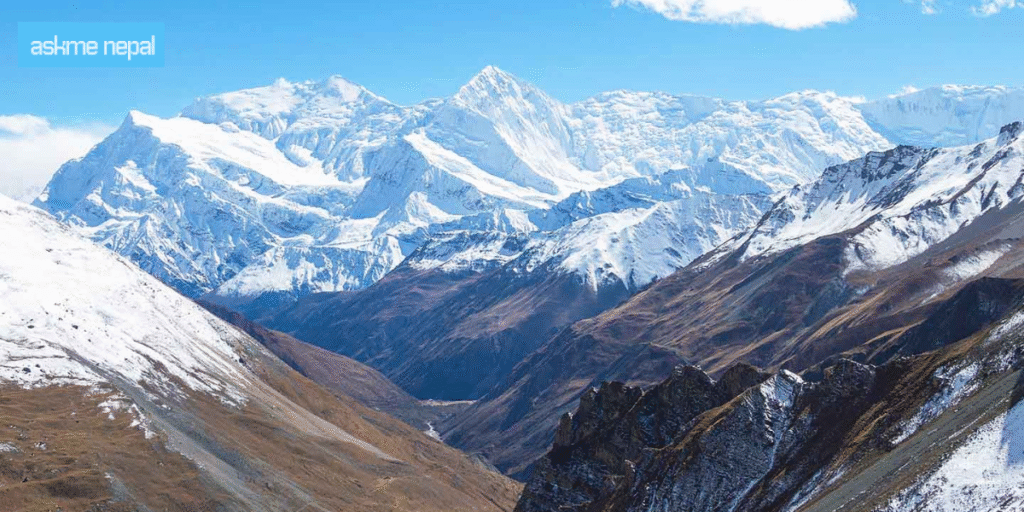
Solo vs. Guided Trekking for the Annapurna Himalayas
The well-established teahouse system makes solo trekking feasible for confident travelers. Trails are generally well-marked, accommodation is plentiful, and you'll meet other trekkers along the way.
However, hiring a guide offers benefits:
- Local knowledge of routes, weather, and culture
- Language translation
- Navigation assistance
- Cultural insights and village connections
- Safety support if problems arise
- Supporting local employment
Responsible Trekking
Preserve the Annapurna massif for future generations:
- Leave no trace: Pack out all rubbish
- Use refillable bottles: Avoid single-use plastic
- Support local businesses: Buy from village shops and teahouses
- Respect culture: Ask permission before photographing people, dress modestly near religious sites
- Stay on trails: Prevent erosion
- Minimize environmental impact: Use the toilets provided, don't pick plants
The Future of the Annapurna Massif
As tourism numbers reach record levels, balancing visitor access with conservation becomes increasingly critical. The Annapurna Conservation Area Project faces challenges in managing 250,000+ annual visitors while protecting fragile mountain ecosystems.
Climate change poses additional threats. Glaciers are retreating, affecting water supplies for downstream communities. Unpredictable weather patterns create new hazards for trekkers and climbers. Warmer temperatures alter vegetation zones, affecting wildlife habitats.
However, sustainable tourism offers hope. Revenue from trekking permits funds conservation projects, alternative energy initiatives, and waste management systems. Community-based tourism ensures local people benefit economically from conservation rather than feeling restricted by it.
New trekking routes like Mardi Himal help distribute visitor pressure across the region rather than concentrating everyone on the Circuit and ABC. Better trail infrastructure reduces erosion while improving safety.
Let's Climb the Annapurna massif
The Annapurna massif stands as one of Earth's most magnificent mountain landscapes, a place where geology, ecology, and human culture converge in extraordinary ways. Whether you dream of standing beneath Annapurna I's massive south face at base camp, crossing the challenging Thorong La Pass, or simply watching sunrise paint distant peaks from Poon Hill, this region offers transformative experiences.
From Pokhara's lakeside, the massif seems impossibly beautiful yet tantalizingly close. Those white peaks shimmering on the horizon call to something deep within us—a yearning for wilderness, challenge, beauty, and the chance to test ourselves against ancient mountains.
The Annapurna Himalaya Nepal region welcomes everyone from casual hikers to elite mountaineers. The teahouse system makes these mountains accessible without sacrificing an authentic mountain experience. You'll sleep in simple lodges, eat traditional dal bhat, share stories with fellow travelers and local families, and wake each morning to peaks that make your heart soar.
Nepal's mountains have waited millennia. They'll wait a bit longer for you. But why make them wait? Start planning your Annapurna Massif adventure today.
Ready to explore Nepal's mountains? Browse our comprehensive trekking guides, read about Nepali culture and customs, or discover Pokhara's best hotels and restaurants to begin planning your perfect Himalayan journey.


