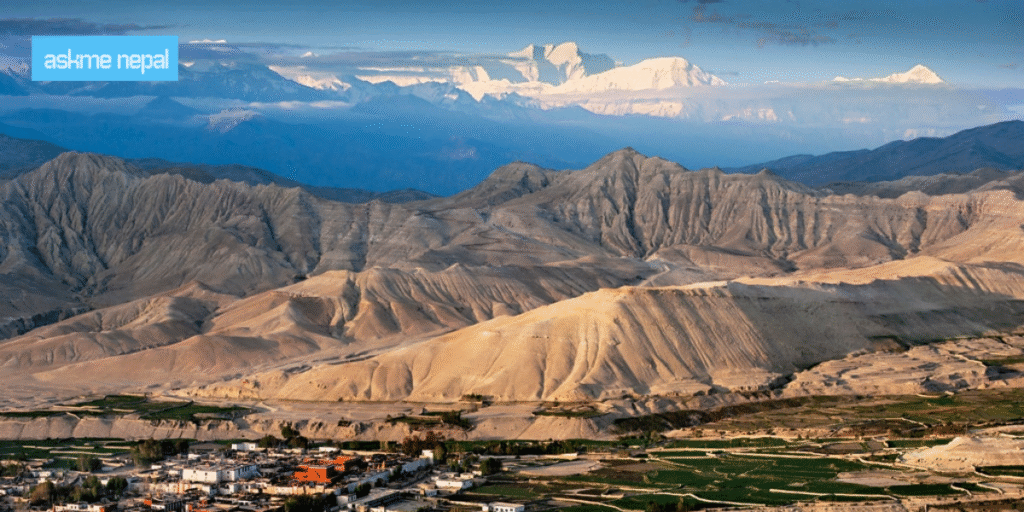
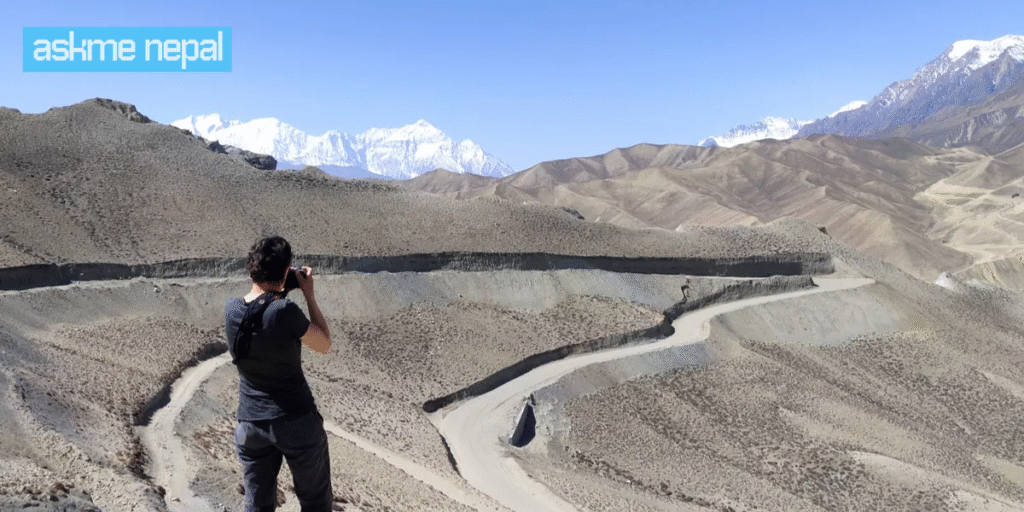
Picture yourself driving through desert-like valleys flanked by towering Himalayan peaks, passing ancient monasteries clinging to cliffsides, and entering a walled medieval city frozen in time. A Mustang road trip takes you into one of Nepal’s most mysterious regions, Upper Mustang, often called the “Last Forbidden Kingdom,” where Tibetan culture thrives in near-isolation at altitudes exceeding 3,800 meters. This journey isn’t just about the destination; it’s about experiencing landscapes and cultures that few travellers encounter, all from the comfort of a sturdy 4WD vehicle.
Whether you’re planning a mustang jeep tour or considering a mustang 4×4 trip, this complete guide covers everything you need to know about your mustang road journey across Nepal’s most remote and captivating region.
Quick Overview:
- Best Time to Visit: March-May and September-November (though summer is uniquely suitable for Mustang)
- Journey Duration: 7-11 days from Kathmandu
- Permit Cost: USD 50 per day (recently changed from USD 500 for 10 days)
- Starting Point: Pokhara or direct flight to Jomsom
- Altitude Range: 2,530m (Kalopani) to 4,130m (mountain passes)
What Makes a Mustang Road Trip Extraordinary?
The Mustang region splits into two distinct characters. Lower Mustang welcomes you with lush valleys, the sacred Muktinath Temple, and comfortable accessibility. But venture beyond Kagbeni, and you cross into Upper Mustang, a restricted area that remained closed to foreigners until 1992. Here, the landscape transforms dramatically into a high-altitude desert where ancient Tibetan Buddhism flourishes, untouched by modern development.
This trans-Himalayan region showcases strong Tibetan cultural influence, with its capital, Lo Manthan, standing as a remarkable medieval walled city that preserves centuries-old traditions, monasteries, and artistic heritage. The barren red cliffs, eroded by millennia of wind, contrast sharply with the snow-capped peaks of the Annapurna and Dhaulagiri ranges visible to the south.
Your road trip passes through the Kali Gandaki Gorge, the world’s deepest gorge, carved between these two 8,000-meter giants. The journey takes you along rough mountain roads and riverbeds, through traditional villages where prayer flags flutter in constant winds, and past mysterious sky caves that archaeologists continue to explore.
Why Choose a Jeep Tour Over Trekking?
Not everyone has the time or physical stamina for a two-week trek through high-altitude terrain. A mustang jeep tour offers the same jaw-dropping scenery, rich Tibetan-Buddhist culture, and remote adventure without requiring days of hiking. You’ll cover in days what would take weeks on foot, making it perfect for travellers with limited time or those who prefer comfort over physical challenge.
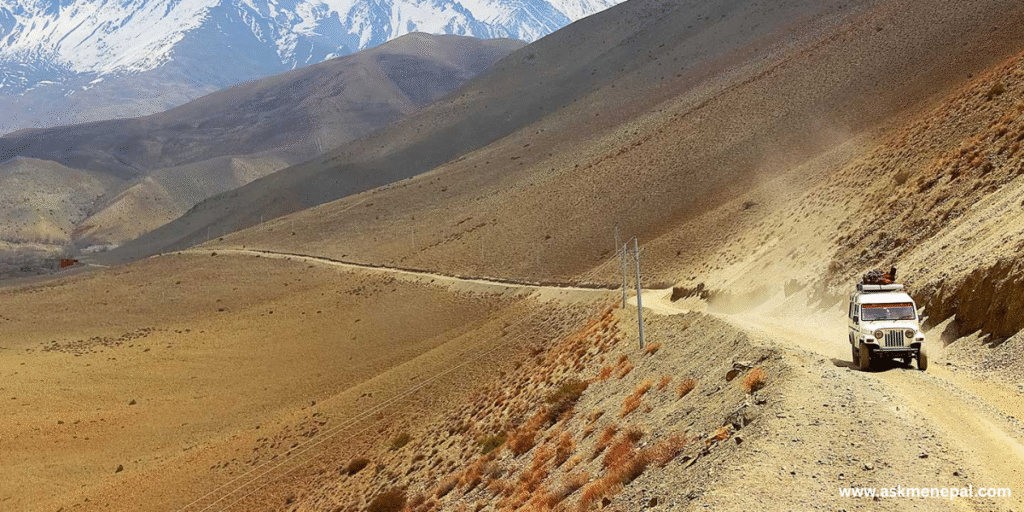
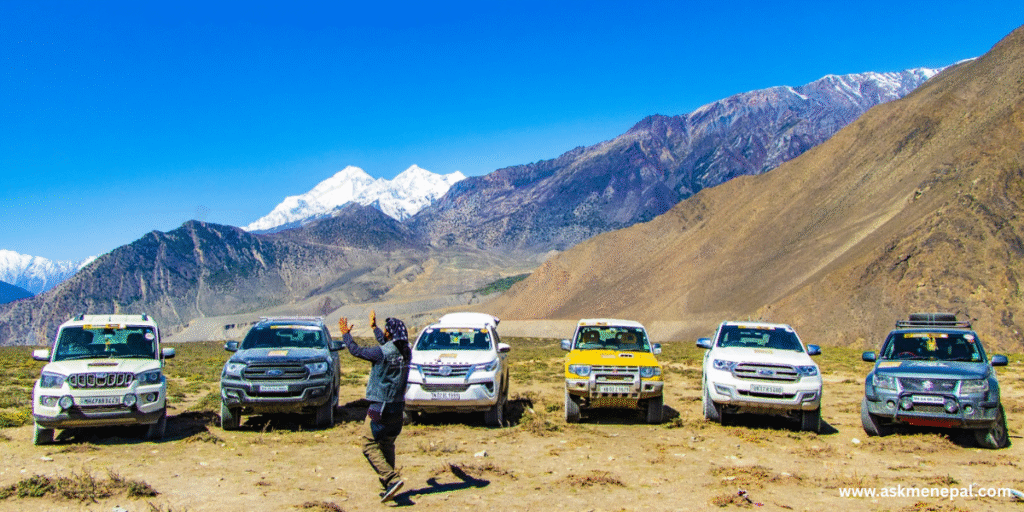
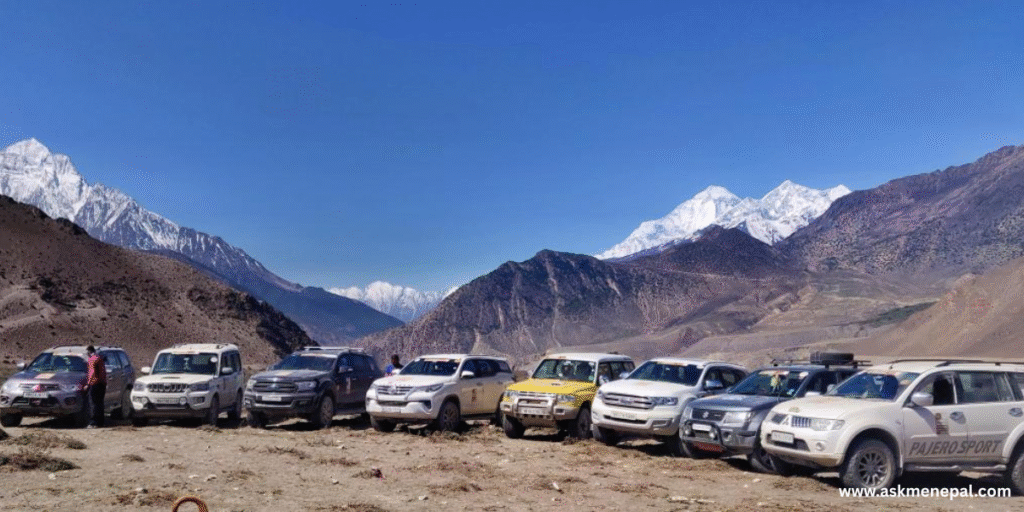
The off-road adventure in a 4WD vehicle brings its own excitement. You’ll navigate rocky paths, cross mountain streams, and wind through narrow gorges, all whilst enjoying protection from the elements and carrying your luggage comfortably. For families, older travellers, or those with mobility concerns, a mustang 4×4 trip makes this incredible region accessible when trekking might not be feasible.
Understanding Mustang’s Regions
Lower Mustang: Gateway to the Forbidden Kingdom
Your Mustang road journey typically begins in Lower Mustang, accessible from Jomsom. This area includes Kagbeni, Marpha, and Muktinath, each offering distinct experiences. Lower Mustang blends Hindu and Buddhist traditions, showing rich local culture with a variety of accommodation options ranging from basic lodges to luxury establishments like Shinta Mani Mustang in Jomsom.
Marpha village deserves a special stop. Famous for its apple orchards and apple brandy production, the village’s white-washed houses and narrow cobbled streets create a charming atmosphere. You can taste traditional apple pie, purchase local apple products, and explore Buddhist monasteries dating back centuries.
Upper Mustang: The Last Forbidden Kingdom
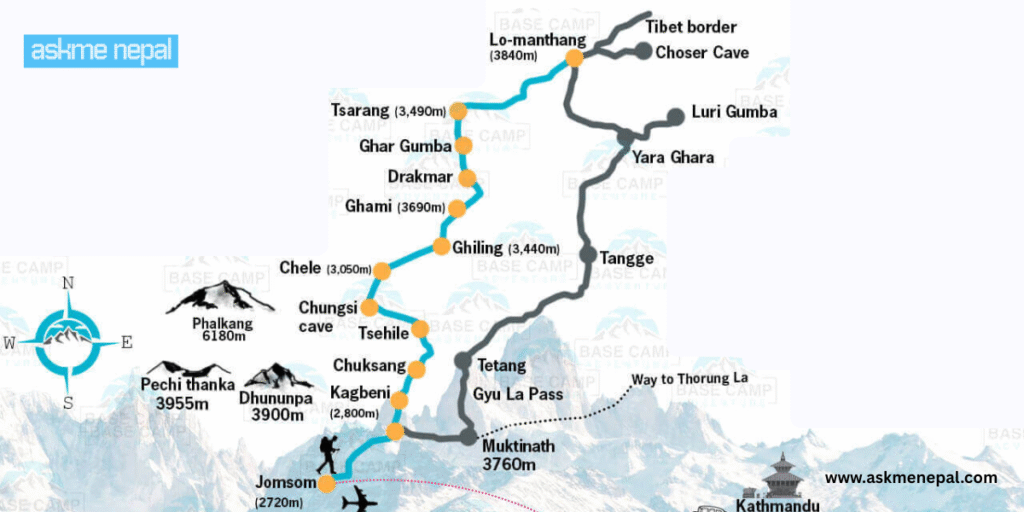
Beyond Kagbeni lies Upper Mustang, a restricted region north of the Kali Gandaki River where special permits and licensed guides are mandatory. The landscape shifts dramatically into a high-altitude desert resembling Tibet. Villages like Chele, Geling, Ghami, and Tsarang appear like mirages against barren red cliffs, their white-washed buildings clustered around ancient monasteries.
Lo Manthang, the capital, stands at 3,840 meters as the crown jewel of your journey. This medieval walled city houses the five-storey white-washed king’s palace, ancient monasteries with priceless Buddhist art, and maintains traditions unchanged for centuries. Only about 6,000 people inhabit the entire Upper Mustang region, following Tibetan Buddhism with ceremonies and festivals passed down through generations.
Best Time for Your Mustang Road Trip
Spring Season (March-May)
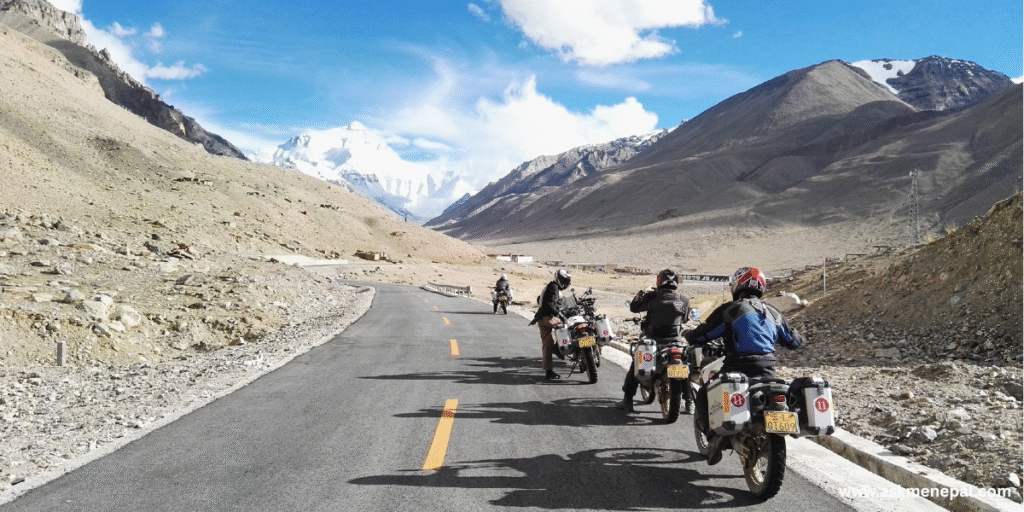
Spring brings stable weather and warming temperatures to Mustang. Daytime temperatures hover between 16-22 degrees Celsius, though mornings and nights remain chilly, dropping to 0 degrees Celsius. The rhododendrons bloom in lower elevations, and clear skies provide spectacular mountain views. May offers the unique opportunity to witness the Tiji Festival in Lo Manthang, a three-day celebration of prayers, masked dances, and colourful ceremonies.
Summer/Monsoon Season (June-August)
Here’s where Mustang defies Nepal’s typical weather patterns. Unlike most of Nepal, Upper Mustang lies in the rain shadow area of the Himalayas, protected from monsoon rains. Summer temperatures range from 16-25 degrees Celsius during the day, dropping to 3 degrees Celsius at night. This makes summer surprisingly popular for Mustang visits when the rest of Nepal experiences heavy rainfall.
August brings the Yartung Festival, the horse festival celebrated during the full moon. You’ll see traditional horse racing, archery competitions, and cultural performances showcasing local horsemanship skills.
Autumn Season (September-November)
Autumn ranks as the most popular season for mustang road trips, offering dry weather, stable conditions, and crystal-clear mountain visibility. The sky remains clear, revealing panoramic views of Annapurna, Dhaulagiri, Nilgiri, and surrounding peaks. Daytime temperatures remain pleasant, making exploration comfortable, though nights grow increasingly cold as winter approaches.
Winter Considerations (December-February)
Winter transforms Mustang into a snow-covered wonderland. Heavy snowfall blankets the landscape, creating stunning scenery but challenging road conditions. Proper winter preparation becomes essential, as trails can become slippery and dangerous due to ice and snow accumulation. Many locals depart Lo Manthang for lower elevations during the winter months to escape the extreme cold.
Essential Permits and Regulations
Recent changes have made Mustang more accessible. Nepal has replaced the previous USD 500 flat fee (for 10 days) with a more flexible USD 50 per person per day permit system, making shorter trips more affordable. However, the permit requirements remain strict and must be understood before planning your journey.
Required Permits
Upper Mustang Restricted Area Permit (RAP): Issued by the Immigration Office in Kathmandu or Pokhara, this permit now costs USD 50 per person per day. It can only be obtained through registered local trekking agencies; individual applications aren’t permitted. You’ll need your original passport (valid for at least six months), a valid Nepali visa, and passport-sized photographs.
Annapurna Conservation Area Permit (ACAP): Since Upper Mustang falls within the Annapurna Conservation Area, you need an ACAP costing approximately USD 25-30. This permit has no time restrictions; once issued, you can remain in the conservation area as long as desired.
TIMS Card: The Trekkers’ Information Management System card costs around USD 10-20 and helps track trekker movements for safety purposes. However, if you fly to Jomsom and return by flight, the TIMS card isn’t required.
Important Restrictions
Government regulations require a minimum of two people to obtain Upper Mustang permits. Solo travellers cannot enter independently, even with experience. You must also hire a licensed guide who accompanies you throughout the journey. These regulations protect the region’s cultural heritage and ensure visitor safety.
Permit checks occur at Kagbeni, the gateway between Lower and Upper Mustang. Officials verify your permits and register your entry and exit from the restricted area.
Planning Your Mustang Road Trip Itinerary
Reaching the Starting Point
Most mustang jeep tours begin from either Kathmandu or Pokhara. The road from Kathmandu to Pokhara takes 7-8 hours by tourist bus, winding through lush landscapes along the Trishuli and Marsyangdi rivers. A 25-minute flight offers a quicker alternative, providing aerial views of the Himalayan foothills.
From Pokhara, you have two options: drive the entire route (approximately 10-12 hours to Jomsom) or fly to Jomsom (15 minutes) and begin your jeep tour from there. The flight option saves time, but weather delays are common, especially after mid-morning when valley winds strengthen.
Recommended 8-Day Itinerary
Day 1: Kathmandu to Pokhara Drive or fly to Pokhara (840m). Explore the lakeside city, visit Phewa Lake, and prepare for your mountain journey. Overnight in a comfortable hotel.
Day 2: Pokhara to Kagbeni via Jomsom The Pokhara to Beni section (approximately 3 hours) features mostly blacktopped roads. From Beni, expect about 5 hours of rough off-road driving through Tatopani, Ghasa, Lete, and Marpha to reach Jomsom. The 310-meter Rupse Waterfall provides a spectacular photo opportunity. Continue to Kagbeni (2,804m) at the entrance to Upper Mustang.
Day 3: Kagbeni to Ghami Cross into Upper Mustang’s restricted area and drive through Chhusang, where the landscape transforms from lush greenery to desert-like terrain. Visit the Chungsi Cave Monastery before reaching Ghami (3,510m), known for its white-washed houses and traditional architecture.
Day 4: Ghami to Lo Manthang Drive through Tsarang village, exploring its impressive monastery and old fort. Continue to Lo Manthang (3,840m), the medieval walled capital of Upper Mustang, following the Kali Gandaki River’s natural course through the barren landscape.
Day 5: Explore Lo Manthang. Spend the full day exploring Namgyal Gompa, the sky caves of Chhoser, and Shija Jhong Cave, archaeological sites dating back over 3,000 years. Visit several monasteries and experience sky burial sites still used in traditional Tibetan ceremonies.
Day 6: Lo Manthang to Chhuksang. Begin your return journey, stopping at different villages to experience varied perspectives. The six-hour drive allows time for photography and cultural interactions.
Day 7: Chhuksang to Tatopani via Muktinath Detour to Muktinath Temple (approximately 21km from Kagbeni via blacktopped road), one of Nepal’s most sacred pilgrimage sites for both Hindus and Buddhists. Continue to Tatopani, known for its natural hot springs.
Day 8: Tatopani to Pokhara and Return to Kathmandu Complete your Mustang road journey with the drive back to Pokhara, then return to Kathmandu by road or flight.
Road Conditions and Vehicle Requirements
Understanding road conditions helps set realistic expectations for your Mustang 4×4 trip.
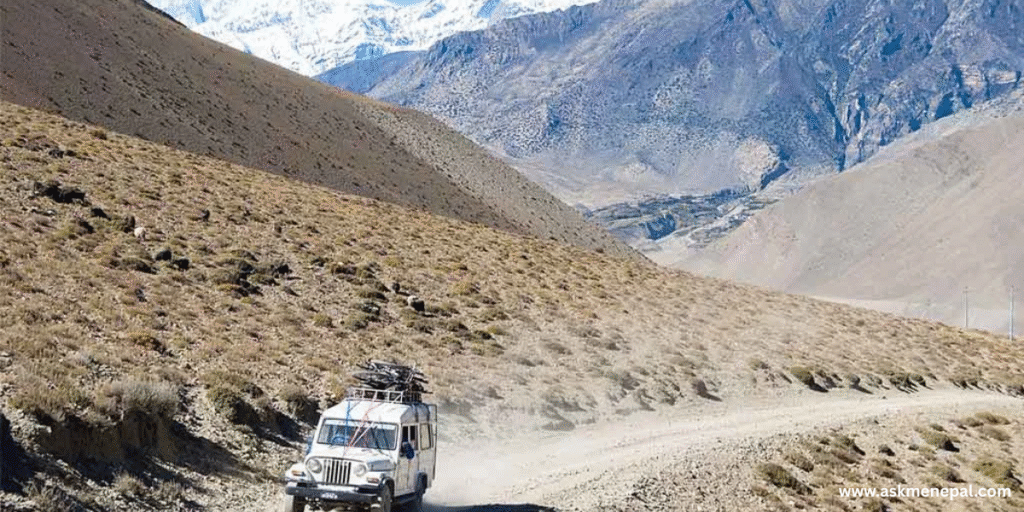
The Kathmandu-Pokhara highway features blacktopped roads, and the Pokhara-Beni section is mostly paved, though ongoing construction may create rough patches. From Beni onward, expect approximately 5 hours of genuine off-road conditions, rocky, dusty, and bumpy.
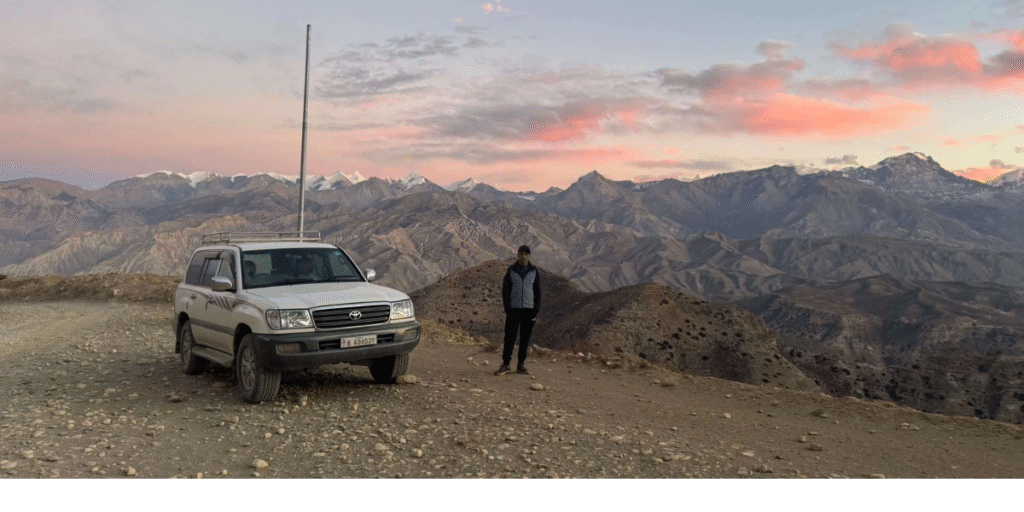
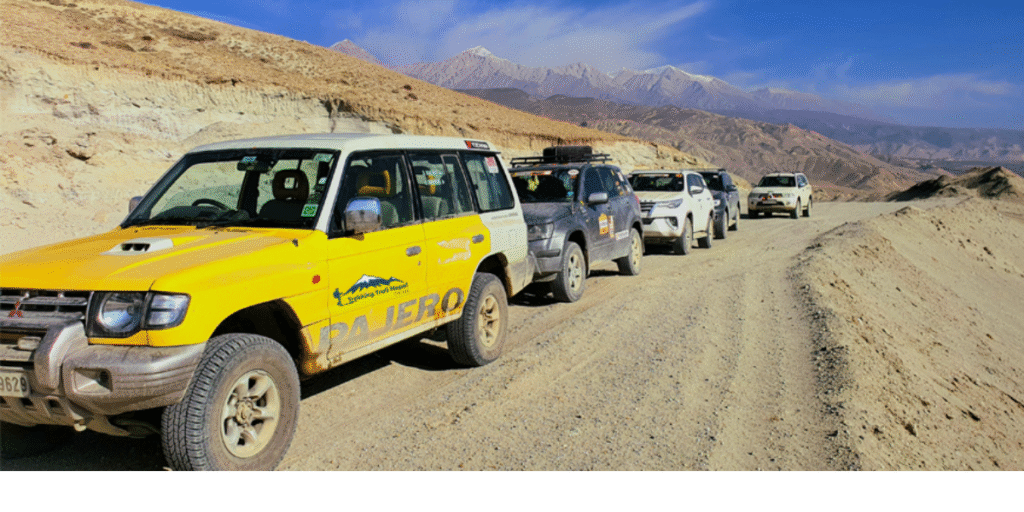
The off-road sections require proper 4WD vehicles. Standard cars lack sufficient ground clearance, and monsoon conditions can create muddy obstacles requiring four-wheel drive capability. Most tour operators use Mahindra Scorpio jeeps or Toyota Land Cruisers, both equipped with 4WD systems and experienced drivers familiar with the challenging terrain.
Beyond Kagbeni, roads remain wide but unpaved all the way to Lo Manthang. Recent improvements mean only 15-20 kilometres (9-12 miles) between Beni and Kagbeni remain particularly dusty and difficult, whilst the section from Kagbeni to Muktinath now features smooth blacktopped roads.
What to Expect: Accommodation and Facilities
Accommodation options vary dramatically between regions.
In Pokhara and Kathmandu
Enjoy full hotel amenities, including hot showers, WiFi, varied restaurants, and comfortable beds. These cities offer everything from budget guesthouses to luxury resorts.
In the Mustang Region
You’ll stay in local teahouses or basic lodges offering twin-sharing rooms, warm blankets, and traditional Nepali or Tibetan meals. Whilst simple, the hospitality is heartwarming, and a hot cup of tea with mountain views feels luxurious.
Teahouses typically provide basic amenities, beds with blankets, shared or attached bathrooms, and communal dining areas. Meals usually consist of dal bhat (rice with lentil soup), momos, noodle soups, fried potatoes with various toppings, and limited meat options. Vegetarian food is readily available and often fresher at higher altitudes.
Hot showers may require extra payment, and WiFi, when available, is unreliable and slow. Electricity comes from solar panels in many villages, so charging devices during sunny hours works best. Laundry services are available at most hotels; you can give dirty clothes to the staff for cleaning.
Cultural Highlights and Must-Visit Sites
Lo Manthang: The Forbidden City
This medieval walled city preserves Tibetan culture and traditions rarely seen elsewhere. The five-storey king’s palace dominates the skyline, whilst ancient monasteries house priceless religious art, statues, and manuscripts. Three main monasteries, Thubchen, Jampa, and Chodey, showcase stunning mandala paintings and enormous clay statues.
Walking through Lo Manthang’s narrow alleys transports you centuries back. Local residents maintain traditional dress, practise ancient customs, and speak Tibetan dialects. The Tiji Festival in May brings the city alive with ritual dances performed by monks in elaborate costumes, re-enacting the victory of good over evil.
Sky Caves and Monasteries
The Chungsi Caves, formed by strong winds that chiselled away loose sediments over millennia, create a stunning spectacle. These cliffside dwellings, carved into vertical rock faces, served various purposes: meditation retreats, living spaces, and even burial chambers.
Archaeologists continue excavating these sites, uncovering artefacts, manuscripts, and human remains that provide insights into ancient civilisations. Some caves reach heights requiring technical climbing equipment to access, adding mystery to their original purpose.
Muktinath Temple
Located at 3,710 meters, Muktinath is one of Nepal’s most important Hindu shrines, attracting pilgrims from across the subcontinent. The temple complex features 108 water spouts shaped like cow heads, and an eternal flame burns from natural gas within the temple. Buddhists also revere this site, making it a rare example of religious harmony.
The 21-kilometre drive from Kagbeni provides stunning mountain views and passes through traditional villages where life continues unchanged for generations.
Practical Travel Tips
Altitude Considerations
You’ll reach elevations above 3,800 meters, especially in Lo Manthang. Whilst you’re not trekking, mild altitude symptoms can still occur, including headaches, nausea, and shortness of breath. The gradual ascent by vehicle helps with acclimatisation, but staying properly hydrated, avoiding alcohol, and eating light meals reduces risks.
If altitude sickness symptoms worsen, descending to lower elevations provides the most effective treatment. Your guide will monitor your condition and adjust plans if necessary.
Packing Essentials
Clothing:
- Layered clothing system (temperatures vary dramatically throughout the day)
- Warm jacket for mornings, evenings, and higher altitudes
- Sun protection clothing (the high-altitude sun is intense)
- Windproof outer shell
- Comfortable trekking shoes (for walking around villages and monasteries)
- Sunglasses (essential for dusty, sunny conditions)
Other Essentials:
- High SPF sunscreen (50+ recommended)
- Lip balm with sun protection
- Personal medications and first-aid supplies
- Water purification tablets or a filter
- Camera with extra batteries (charging opportunities are limited)
- Headlamp or torch (power outages are common)
- Cash (ATMs aren’t available beyond Pokhara)
Health and Safety
Bringing breathable, windproof, and waterproof clothing is essential. SIM cards require a passport-size photo and passport copy, and can be arranged in Sonauli or Kathmandu through your tour operator.
Carry personal medical supplies, including altitude sickness medication (Diamox), pain relievers, anti-diarrheal medication, and any prescription drugs you require. A basic first-aid kit comes standard with reputable tour operators.
Cultural Sensitivity
Respect local customs and traditions. Remove shoes before entering monasteries and homes. Ask permission before photographing people or religious sites. Dress modestly, covering shoulders and knees. Avoid public displays of affection. The traditional greeting “Namaste” (hands pressed together) shows respect.
Photography restrictions apply in some monasteries; always ask permission first. Some sites charge photography fees separately from entrance fees.
Cost Breakdown
Budget for your mustang road trip varies based on several factors:
Permit Costs:
- Upper Mustang RAP: USD 50 per day per person
- ACAP: USD 25-30 per person
- TIMS Card: USD 10-20 per person
Tour Packages: Complete packages typically include 4WD jeep transportation, full-board meals during the tour, accommodation in guesthouses, all permits, an English-speaking guide, driver expenses, medical supplies, and government taxes.
Seven to ten-day packages generally cost USD 1,200-2,000 per person for group tours. Private tours cost more but offer flexibility in itinerary and pace. Luxury options with better accommodation and additional services run USD 2,500-3,500 per person.
Additional Expenses:
- International flights and Nepal visa (USD 30-125)
- Meals in Kathmandu and Pokhara
- Beverages, snacks, and personal items
- Tips for guide and driver (customary)
- Souvenirs and monastery entrance fees
- Travel insurance (mandatory)
Making Your Mustang Road Trip Reality
Booking through a registered Nepali trekking agency is mandatory for obtaining permits and entering Upper Mustang. Choose operators with experience, positive reviews, and proper licensing. Verify they provide comprehensive insurance for guides and drivers, use well-maintained 4WD vehicles, and employ knowledgeable guides familiar with the region.
Ask detailed questions about the itinerary, accommodation standards, meal arrangements, and what happens if flight delays occur (common on the Pokhara-Jomsom route). Flexible operators who can adapt to weather conditions and personal needs provide the best experiences.
Why This Journey Matters
Upper Mustang remained closed to the outside world until the 1990s. Even today, obtaining special permits and following strict regulations are necessary to enter this territory, helping preserve its cultural heritage and unspoiled nature. Your visit supports local communities whilst experiencing a way of life that has remained unchanged for centuries.
The landscapes defy description, towering red cliffs eroded into fantastical shapes, prayer flags snapping in constant winds, ancient monasteries perched on impossibilities, and the warm smiles of people maintaining centuries-old traditions. This isn’t just a road trip through mountains, it’s a journey through time to a kingdom that exists nowhere else on Earth.
Conclusion
A mustang road trip delivers experiences that few travellers encounter, driving through the world’s deepest gorge, exploring a medieval walled city, witnessing Tibetan Buddhist ceremonies unchanged for centuries, and traversing landscapes that resemble another planet. Whether you’re drawn by cultural fascination, adventure seeking, or simply the desire to see places few people reach, Mustang rewards every traveller with memories that last a lifetime.
The combination of dramatic landscapes, rich cultural heritage, and the adventure of off-road exploration makes this journey extraordinary. From the comfort of your 4WD vehicle, you’ll access one of Earth’s most remote inhabited regions, where prayer wheels spin in ancient monasteries, local artisans create traditional crafts using centuries-old techniques, and the Himalayas rise in every direction.
Ready to Begin Your Adventure? Start planning your Mustang jeep tour by researching registered trekking agencies, checking available dates (especially if you want to attend the Tiji Festival in May), and gathering required documents. The mountains of Mustang await, offering an adventure that blends comfort with exploration, cultural immersion with natural wonder, and ancient traditions with modern accessibility.
Whether you choose spring flowers, summer festivals, autumn clarity, or winter snow, Mustang welcomes you with landscapes that steal your breath and hospitality that warms your heart. This is more than a road trip; it’s a pilgrimage to one of the last places on Earth where time moves slowly, and tradition matters deeply.